
Switzerland vs. Germany: Differences in real estate auctions
October 17, 2025
Introduction
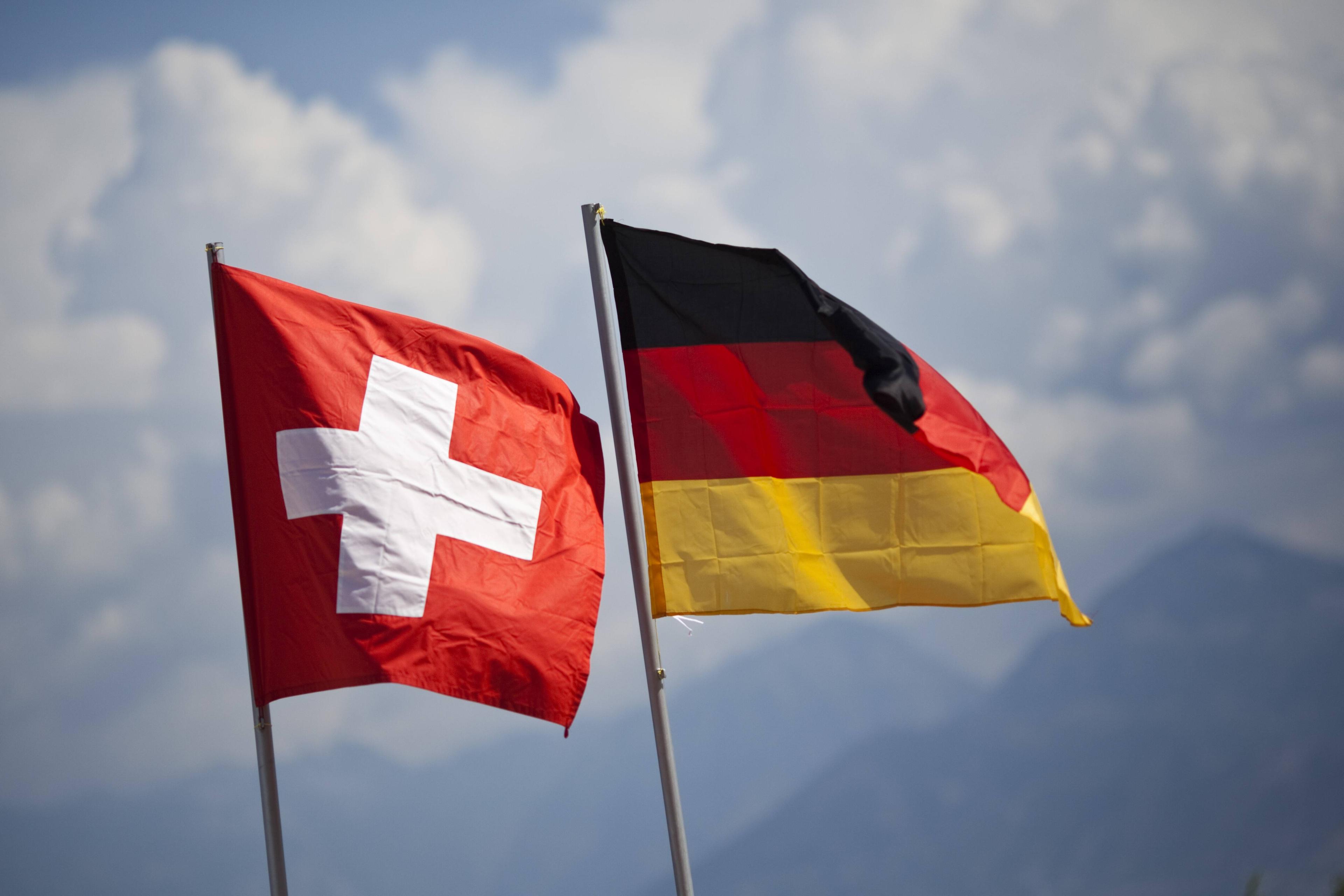
Property auctions are a fixed part of the real estate market in Switzerland and Germany - but the systems, processes, and market mechanisms differ significantly. While over 30,000 properties are forced into auction each year in Germany, Switzerland typically sees between 600 and 850 procedures in the same period. The reason lies not only in the different sizes of the markets but also in the legal situation, the structure of property ownership, and market transparency.
A direct comparison of the years 2020 to 2024 shows: both countries are experiencing remarkable stability despite rising interest rates. However, the German market reacts more quickly to economic fluctuations, while Switzerland remains stable in the long term due to its federal enforcement system and conservative lending practices. This opens up different opportunities for investors - especially in forced auctions.
Market Volume and Number of Procedures
Germany will record around 34,230 forced auctions in 2024 - about 50 times the volume of Switzerland. The German market shows a clear upward trend after a low point in 2022 (+27,594 procedures). In Switzerland, the number has remained constant at about 600-700 procedures annually. The distribution varies widely by region: while particularly many properties are auctioned in Ticino (TI), Vaud (VD), and Valais (VS), cantons like Obwalden (OW), Uri (UR), and Zug (ZG) are at the bottom.
Ratio to Population
In relation to the population, astonishing differences emerge: in Germany, there are an average of 35 forced auctions per 100,000 inhabitants, while in Switzerland there are only 7-8 procedures. The reason lies in Swiss enforcement law, which intervenes early and thus often prevents the liquidation of a property. In Germany, on the other hand, rising financing costs and failed restructurings lead more quickly to a court auction.
Legal and Organizational Differences
Switzerland: Enforcement Office as the Central Authority
In Switzerland, a forced auction is conducted by the cantonal enforcement offices. The basis is the Federal Act on Debt Enforcement and Bankruptcy (SchKG). The process is highly formalized but organized differently by region. The auction is public, usually with a minimum bid based on the official valuation. The high transparency but low number of procedures leads to stable prices and prevents speculative overheating.
Germany: District Courts as Market Players
In Germany, the district courts are responsible for forced auctions. The procedure is subject to the Civil Procedure Code and the ZVG (Law on Forced Auction and Forced Administration). Unlike in Switzerland, properties can receive bids at 50% of the market value. This regulation makes the market more volatile and regularly provides investors the opportunity to acquire properties significantly below market value.
“Switzerland protects the debtor, Germany mobilizes the market - both systems reflect different economic cultures.”
Price Structures and Auction Prices
The average value of an auctioned property in Switzerland is around 1.1 million CHF, while in Germany it is about 308,000 €. The discrepancy arises from the different market structures: Swiss forced auctions often involve single-family homes and condominiums in desirable locations, while in Germany a larger portion pertains to older existing properties and structurally weak regions.
In Germany, the average discount compared to market prices in 2024 was 25-30 % - an increase over the previous year. In Switzerland, discounts are lower (10-15 %), as demand remains stable, particularly in regions like Ticino, Vaud, and Bern (BE).
Development of Auction Prices 2020-2024
| Year | Switzerland (Ø Market Value) | Germany (Ø Market Value) | Remark |
|---|---|---|---|
| 2020 | 912,000 CHF | 275,000 € | Stable markets despite the pandemic |
| 2022 | 903,000 CHF | 297,000 € | Switzerland down by 27%, Germany slightly declining |
| 2023 | 1,020,000 CHF | 304,000 € | Growing volume with stable prices |
| 2024 | 1,100,000 CHF | 308,000 € | Switzerland robust, Germany with higher discount |
Regional Dynamics
In Switzerland, forced auctions are concentrated in the southern cantons of Ticino, Vaud, Valais, and Bern. These regions account for over 60% of all procedures. In Germany, however, particularly high rates are seen in North Rhine-Westphalia, Saxony-Anhalt, and Saarland, while cities like Munich, Hamburg, or Stuttgart show a significant decline.
Notably, Switzerland exhibits a low regional volatility - even in cantons with high activity, auction prices remain relatively stable. Germany, on the other hand, shows a bifurcated picture: economically weaker regions record more procedures, while metropolises benefit from stable demand.
Macroeconomic Influences
The interest rate policy of the European Central Bank (ECB) has had a significantly stronger impact in Germany than in Switzerland, where the SNB traditionally acts more cautiously. The result: while rising credit costs in Germany have led to a noticeable increase in partition auctions (37% of all procedures in 2023), this form has remained largely insignificant in Switzerland.
The Swiss market reacts more delayed and strongly to individual fates than to systemic interest rate developments. Thus, it serves as an early indicator for social rather than economic crises - while Germany primarily reflects macroeconomic effects.
Conclusion
The comparison shows two fundamentally different systems: Switzerland offers stability, transparency, and high values, while Germany provides dynamism, volume, and larger price discounts. For investors seeking quality and clarity, Switzerland - particularly through platforms like LocalAuction.ch - offers ideal conditions to find undervalued properties with low risk.
Conversely, those looking for broad market movements, favorable entry prices, and high return potentials will find Germany to be the more active, albeit more volatile, market. Both countries remain - for different reasons - attractive locations for data-based real estate investments.
LocalAuction.ch - Your access to all official property auctions in Switzerland. Precise data. Clear opportunities.
Related articles
Valais real estate under the hammer: From alpine huts to investment properties
August 5, 2025

Market value vs. surcharge: How much do buyers really save on foreclosure auctions?
July 24, 2025
House auctions in Switzerland
September 12, 2025
The process of a foreclosure auction: From announcement to auction
February 9, 2025
Current Listings
Browse all available real estate auctions
All official auctions of properties by Swiss bankruptcy and debt collection offices