·Privacy Policy·GTC·Imprint·Support·Subscriptions·FAQ·Magazine
Swiss Solution logoSwiss Solution
© 2025 Local Auction
·Privacy Policy·GTC·Imprint·Support·Subscriptions·FAQ·Magazine
Swiss Solution logoSwiss Solution
© 2025 Local Auction
hammer icon
Local Auction
///Schloss Rued (AG): Successful foreclosure auction of a historic landmark

Schloss Rued (AG): Successful foreclosure auction of a historic landmark

April 5, 2025

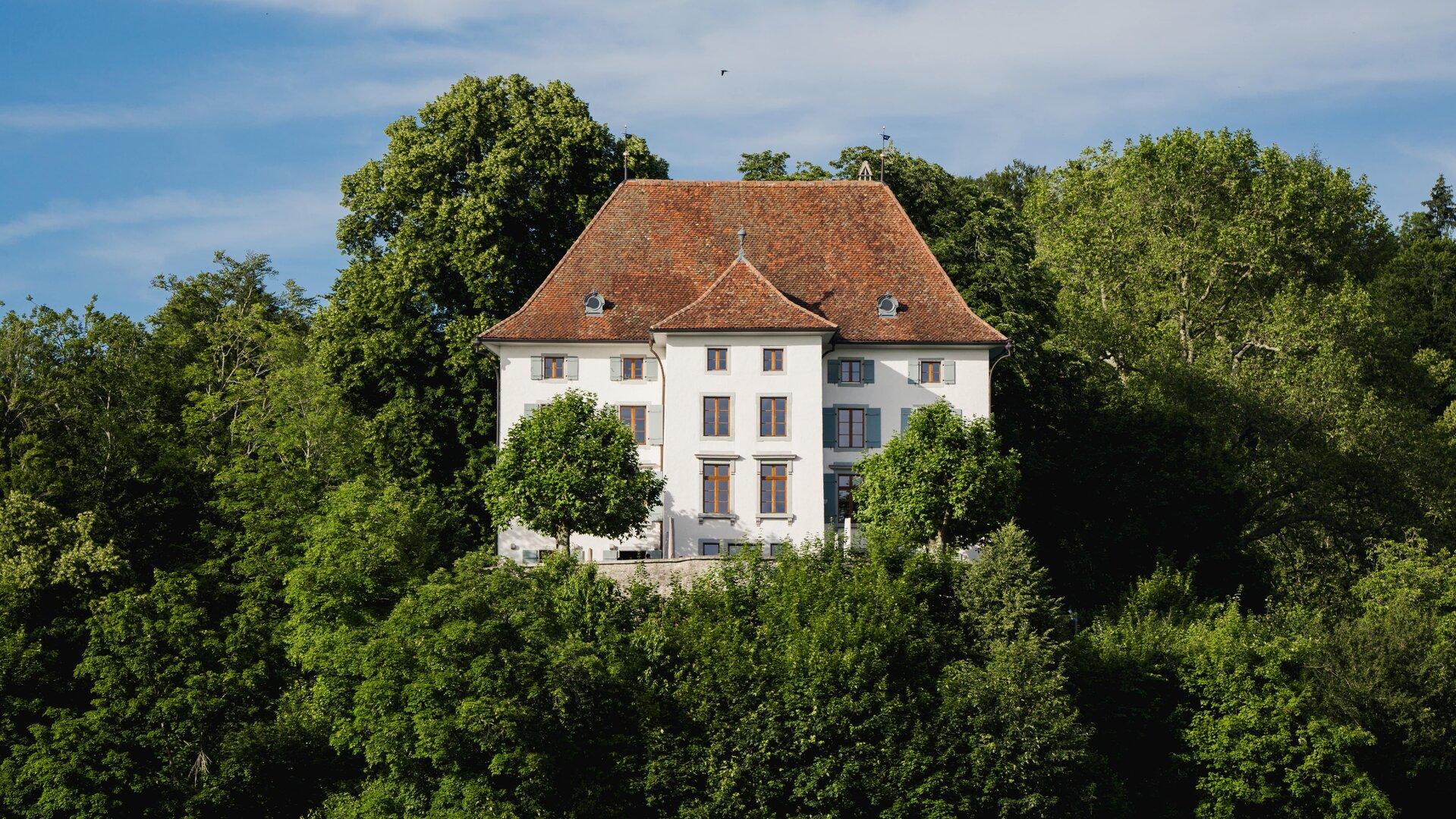
Castle on the edge of a forest and history.

On October 20, 2006, the severely neglected Castle Rued went under the hammer. After just a few rounds of bidding, the Aargau high-tech company Erowa AG was awarded the contract for 2.72 million CHF. This not only ensured the immediate rescue of the historical monument but also initiated a comprehensive restoration that was successfully completed in 2018.


1 Overview of the Property

  • Location: Castle hill above the village of Schlossrued (District of Kulm), with panoramic views over the Ruedertal valley.
  • Construction period & Style: 1792 - 1796, early classical four-wing building by architect Carl Ahasver von Sinner.
  • Protection status: Category A according to the Aargau monument protection inventory, fully under federal and cantonal protection.
  • Property: Ensemble of castle, knight's house, washhouse, stork restaurant, and 18 hectares of land.
  • Auction price: 2.72 million CHF, renovation budget approximately 12 million CHF (own and funding resources).
  • Current use: Barrier-free seminar and cultural center with microbrewery and guesthouse.
" The canton could never preserve all castles, dedicated entrepreneurs like Erowa are a blessing for monument conservation."

2 Chronology of the Forced Auction & Restoration

DateEvent
1347First documented mention of a Castle Rued.
1775Great fire destroys the medieval complex.
1792 - 1796Reconstruction as an early classical country castle by Carl Friedrich von May.
1989Sale to investor H. A. Strittmatter, lack of maintenance funds leads to decay.
20.10.2006Forced auction: Erowa AG acquires the castle for 2.72 million CHF.
2010 - 2014Planning & monument conservation concepts, building permit granted.
2014 - 2018Complete renovation including basement construction, removal of inappropriate modifications, and reintegration of historical elements.
April 2018Reopening as a public seminar and meeting center with a village festival.

3 Legal Framework

3.1 Foreclosure Procedures according to SchKG

  1. Foreclosure request (Art. 151 SchKG): Creditors demand auction in case of payment default.
  2. Public announcement (Art. 156): At least four weeks before the date in the official gazette.
  3. Bidding & Award (Art. 143): Highest bid receives possession, 10% deposit due immediately.

3.2 Monument Protection & Owner Responsibilities

  • Federal Law NHG (Art. 24ff.): Requires new owners to preserve protected substance.
  • Cantonal DSG-AG: Changes require permission from the cantonal monument protection office, proper restoration can be subsidized up to 30%.
  • Tax Relief: Monument investments are fully tax-deductible in Aargau.

4 Economic & Cultural Context

  • Value-Add from Renovation: Investment sum (≈ 12 million CHF) increases usable area by 25% without diminishing monument value.
  • Event Potential: Up to 250 people per event, break-even at ~80 occupancy days/year.
  • Regional Benefit: Local trades were involved, over 35,000 working hours were contributed to craftsmanship & research.
  • Tourist Attraction: Castle tours & microbrewery attract around 12,000 visitors annually.

5 Opportunities & Responsibilities for Buyers of Historical Properties

  1. Due Diligence: Assess historical inventory, appraisal report and requirements early.
  2. Secure Funding: Culture & monument conservation, lottery funds and foundations (e.g. Loterie Romande) can co-finance up to 40%.
  3. Utilization Concept: A combination of seminars, gastronomy, and cultural events generates cash flow for maintenance.
  4. Long-term Horizon: Restoration of historical substance requires "patience capital" and collaborative communication with authorities.

6 Best-Practice Learnings from Castle Rued

  • Teamwork with Monument Conservation: Early compromise finding (e.g., elevator-capable core drilling) saves years.
  • Careful Restoration: Original tiled stoves, doors, and parquet were repurchased and integrated.
  • Multiple Benefits: The combination of culture, education, and culinary arts maximizes occupancy without mass tourism.
FAQ on Forced Auction of Cultural Goods

Can a highest bidder simply demolish a protected castle?
No. Protection status obliges its preservation, demolition permits are practically excluded.

Are there funding aids?
Yes. In addition to cantonal contributions, the federal government, lottery funds, and foundations provide interest-free loans or non-repayable grants.

Can the castle be used as a private residence?
Generally yes, as long as public interests (access, appearance) are preserved and uses are compatible with the requirements.


7 Conclusion

The forced auction of Castle Rued is a prime example of how a legally regulated process can save dilapidated cultural goods and lead them to a sustainable use. Thanks to clear SchKG procedures, committed ownership, and constructive monument conservation, a troubled asset has been transformed into a vibrant seminar and meeting center, benefiting the region, culture, and economy alike.

Related articles

Historic waterfront building.

House foreclosures: This is how the process works

September 19, 2025

Chapel bridge with flower beds.

Swiss forced sale

October 24, 2025

Person holds long shopping receipt.

Surprise costs: Why the cheapest bid isn't always the best

June 13, 2025

Waterfront promenade in Beckenried on Lake Lucerne.

Foreclosure auction in Nidwalden: Small pieces of home with high value

July 5, 2025

Current Listings

Browse all available real estate auctions

All official auctions of properties by Swiss bankruptcy and debt collection offices

Current Listings

Browse all available real estate auctions

All official auctions of properties by Swiss bankruptcy and debt collection offices